carnivore diert
the Carnivore Diet
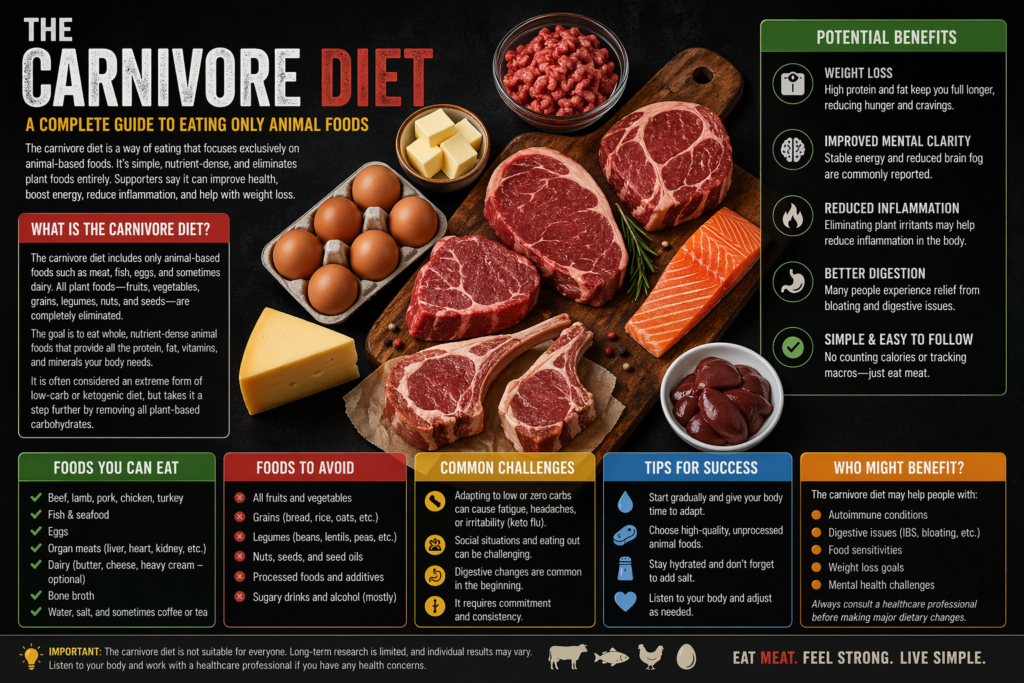
The carnivore diet is one of the most controversial and fascinating dietary trends of the modern era. At its core, it’s incredibly simple: you eat animal-based foods and eliminate almost everything else. That means meat, fish, eggs, and sometimes dairy make up your entire daily intake. No fruits, no vegetables, no grains—nothing plant-based. While this might sound extreme at first, the idea behind it has gained traction among people looking for improved health, weight loss, and relief from chronic conditions.
What makes the carnivore diet unique is its complete departure from traditional nutritional advice. For decades, we’ve been told that a balanced diet requires fruits, vegetables, and fiber. The carnivore approach challenges that idea entirely, arguing that humans can thrive on animal foods alone. Advocates claim it simplifies eating, reduces inflammation, and eliminates many common food sensitivities.
Despite its growing popularity, the carnivore diet remains widely debated. Some people report life-changing benefits, while others raise concerns about long-term health risks. This article explores everything you need to know—from how it works and its benefits to potential downsides and practical tips—so you can form an informed opinion.
What Exactly Is the Carnivore Diet?
At its simplest, the carnivore diet is an all-animal-food eating plan. This means your meals revolve entirely around foods like beef, chicken, fish, eggs, and sometimes dairy products like cheese or butter. Water is the primary drink, though some followers also include coffee or tea. Everything else—fruits, vegetables, legumes, nuts, seeds, and grains—is eliminated.
This diet is often considered an extreme version of low-carb or ketogenic diets. However, it goes even further by removing all plant-based carbohydrates entirely. The goal is to rely on protein and fat as your primary energy sources. Many people naturally enter a state similar to ketosis, where the body burns fat for fuel instead of carbohydrates .carnivore diert
There are variations within the carnivore diet. Some people follow a strict version that includes only beef, salt, and water. Others take a more flexible approach, adding eggs, seafood, and dairy. The level of restriction often depends on individual goals, tolerance, and health conditions.
The History and Origins of the Carnivore Diet
Although the carnivore diet seems like a modern trend, its roots go back much further. Historically, certain populations have thrived on predominantly animal-based diets. For example, Arctic communities relied heavily on fish and meat due to limited plant availability. Their survival demonstrates that humans can adapt to a wide range of dietary patterns.
In modern times, the carnivore diet gained attention through anecdotal success stories and online communities. People began sharing their experiences of improved health, weight loss, and reduced inflammation. These stories sparked curiosity and led more individuals to experiment with the diet.
The diet also draws inspiration from ancestral eating patterns. Some proponents argue that early humans consumed large amounts of animal foods and that modern plant-heavy diets may contribute to chronic diseases. While this idea is debated, it has played a significant role in the diet’s popularity.
How the Carnivore Diet Works
The carnivore diet works by drastically simplifying your food intake. By eliminating carbohydrates, the body shifts its primary energy source from glucose to fat. This metabolic state is similar to ketosis, where fat is broken down into ketones to fuel the body and brain .carnivore diert
Another key mechanism is the elimination of potential dietary irritants. Many people experience digestive issues or inflammation due to certain plant compounds. By removing these foods entirely, the carnivore diet acts as a type of elimination diet, helping individuals identify and avoid triggers.
Additionally, the diet often leads to reduced calorie intake without deliberate restriction. Protein and fat are highly satiating, meaning people naturally feel full and eat less. This can result in weight loss and improved metabolic health over time.
Potential Health Benefits of the Carnivore Diet
One of the most commonly reported benefits of the carnivore diet is weight loss. Because the diet is high in protein and fat, it helps reduce hunger and cravings. Many people find it easier to maintain a calorie deficit without feeling deprived, which supports sustainable fat loss.
Another significant benefit is improved mental clarity. Followers often report better focus, stable energy levels, and reduced brain fog. This may be due to stable blood sugar levels and the brain’s use of ketones as an efficient energy source.
The diet is also associated with reduced inflammation. Some individuals with autoimmune conditions or chronic pain report improvements after eliminating plant-based foods. While more research is needed, these anecdotal results have contributed to the diet’s growing popularity.
Nutritional Considerations and Concerns
While the carnivore diet offers potential benefits, it also raises important nutritional questions. One major concern is the lack of dietary fiber, which is typically found in plant foods. Fiber plays a role in digestion and gut health, so its absence can be a concern for some individuals.
Another issue is micronutrient balance. Fruits and vegetables provide vitamins and minerals that may be limited in an all-meat diet. However, proponents argue that animal foods are nutrient-dense and can meet most nutritional needs if consumed properly.carnivore diert
It’s also important to consider long-term effects. Since the carnivore diet is relatively new in its current form, there is limited research on its long-term safety. Anyone considering this diet should monitor their health and consult a professional if needed.
Foods You Can Eat on the Carnivore Diet
The carnivore diet revolves around animal-based foods. The most common choices include beef, lamb, pork, chicken, and fish. These foods provide protein, fat, and essential nutrients that form the foundation of the diet.
Eggs are another staple, offering a versatile and nutrient-rich option. Many people include them daily due to their convenience and affordability. Dairy products like butter, cheese, and heavy cream are sometimes included, depending on individual tolerance.
Organ meats such as liver and heart are highly encouraged by some followers. These foods are rich in vitamins and minerals, making them valuable additions to the diet. While not everyone enjoys them, they can help address potential nutrient gaps.carnivore diert
Foods to Avoid on the Carnivore Diet
The carnivore diet excludes all plant-based foods. This means no fruits, vegetables, grains, legumes, nuts, or seeds. Even foods considered healthy in other diets are completely removed.
Processed foods are also avoided, especially those containing additives, sugars, or plant-based ingredients. The focus is on whole, unprocessed animal products.
Even certain beverages are restricted. Sugary drinks, juices, and most plant-based beverages are eliminated. Water remains the primary drink, with some people allowing coffee or tea.
Common Challenges and Side Effects
Transitioning to the carnivore diet can come with challenges. One of the most common is the “adaptation phase,” where the body adjusts to a lack of carbohydrates. During this time, people may experience fatigue, headaches, or digestive changes.
Another challenge is social and lifestyle adjustment. Eating out or attending social events can be difficult when your food choices are highly restricted. This requires planning and flexibility.
Some individuals also experience digestive issues, especially in the beginning. Changes in bowel habits are common, but they often stabilize as the body adapts to the new diet.
Who Should Try the Carnivore Diet?
The carnivore diet may be suitable for individuals looking to simplify their eating habits or address specific health concerns. People with food sensitivities or autoimmune conditions sometimes find relief through this approach.
It can also appeal to those who struggle with cravings or overeating. The diet’s simplicity and high satiety can make it easier to maintain consistency.
However, it’s not for everyone. Individuals with certain medical conditions or specific nutritional needs should approach this diet with caution and seek professional guidance.
Tips for Starting the Carnivore Diet
If you’re considering the carnivore diet, start gradually. Transitioning from a standard diet to an all-meat approach can be challenging, so easing into it may help.
Focus on quality. Choose high-quality meats and avoid heavily processed options. This ensures you’re getting the best possible nutrients.
Listen to your body. Pay attention to how you feel and adjust your approach as needed. Everyone’s experience with the diet is different, so personalization is key.
Conclusion: Is the Carnivore Diet Worth Trying?
The carnivore diet is a bold and unconventional approach to eating. It challenges traditional nutritional beliefs and offers a unique perspective on health and wellness. For some people, it provides significant benefits, including weight loss, improved mental clarity, and reduced inflammation .carnivore diert
However, it’s not without risks and uncertainties. The lack of long-term research means there are still many unanswered questions about its safety and effectiveness. As with any diet, it’s important to consider your individual needs and goals.
Ultimately, the carnivore diet is an experiment in simplicity. Whether it works for you depends on your body, lifestyle, and willingness to embrace a radically different way of eating.


